
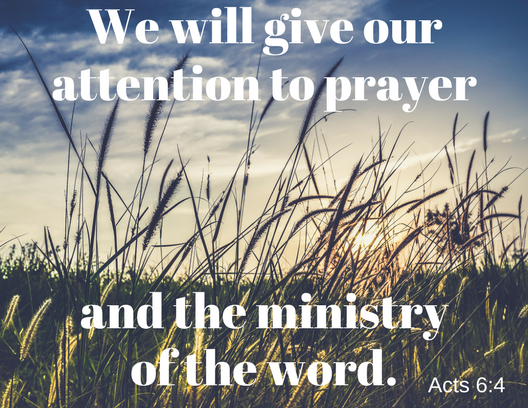
Looking at the start of Acts 6, we see how as the church was growing, and growing quickly, there were “rumblings of discontent.” It goes into a specific issue that we might not directly deal with in our church, but I think everyone can understand discontentedness.
As numbers grow – in anything you are doing, not just church – it is harder to get everyone on the same page and not have some people who are upset with how things are going. Sometimes discontent can grow when there are a lot of people with differing opinions. There may not necessarily be something wrong, but one person wants to do things one way and another person a different way. Sometimes it grows when there is an issue, and it seems like that is what is happening here.
As the early church grew larger, the apostles weren’t able to keep up with all the things that go into the different aspects of church. I think this is something we see today. Pastors have a lot put on them to be in charge, overseeing their congregation. But realistically, they can’t oversee all aspects of ministry.
In chapter 6 of Acts, we see how the apostles, having been gifted in this way, wanted to be able to continue focusing on praying and teaching, but recognized that there are other needs that are out there that need to be met. So they put together a group of people who were well respected, full of the Spirit and wisdom to oversee this area of need (daily distribution of food).
Though we may not have this specific programming in our churches today, and our churches may not even have the same format, we can see how one pastor in many cases, can’t do all the work of the church on their own. Delegation can be a wonderful thing, but it means that there need to be qualified and willing people to let the church continue to do the work of the church.
Do we seek that in our churches today – to make sure that good work is being done without overburdening one person, or one group of people? How can you personally look to serve to ease someone else’s burden?
© Stephanie Fletcher, 2026